Showing posts with label engine. Show all posts

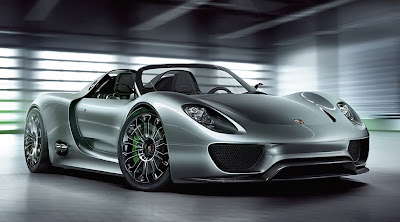
Porsche 918


Porsche 918 


This race-bred powerplant descended from the championship-winning Porsche 918 Spyder’s racing V-8. The Porsche 918 salient features that take it to the outer limits of power per cubic inch include centrally located direct fuel injectors.Porsche 918  variable intake- and exhaust-valve timing, finger-follower valve actuation with Porsche 918  hydraulic lash control, forged

titanium connecting rods, dry-sump lubrication, and a flat (180 degree) forged-steel crankshaft. Porsche 918 crank’s flat configuration enhances cylinder filling while adding wickedness to the exhaust note. There are no belt-driven accessories in the Porsche 918. Porsche 918 clutch between the V-8 and the centrally located 154-hp electric motor provides stop-start operation to eliminate fuel consumption in some operating modes.Porsche 918 is the first-ever naturally aspirated engine with exhaust ports located in the valley (hot-V configuration). Porsche 918  turbocharging, a longstanding Porsche strength, was not employed here because two electric propulsion motors provide ample torque at the low end of the rev range, freeing the engine tuners to strive for spectacular high-rpm power.

Porsche 918 
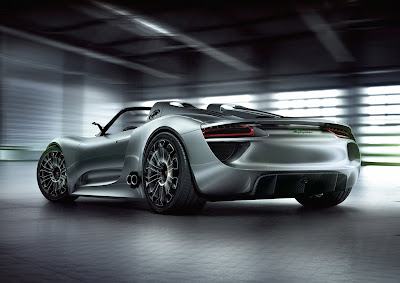

There are three clutches and seven forward gears but not a clutch pedal or an H-pattern in sight. Porsche 918 With two masters to serve—speed and fuel efficiency—technology has moved past the conventional manual transmission Porsche 918 used so satisfyingly in the 2004 Carrera GT. Versus the previous supercar’s,Porsche 918 today’s dual-clutch seven-speed provides a 37-percent-greater ratio spread, no interruption of power delivery during upshifts, and faultless operation that doesn’t depend on a skilled driver. In simple terms, the Porsche 918 dual-clutch way is quicker and significantly more fuel efficient. The driver gets shift paddles to play with and a dash toggle (park, neutral, drive, reverse) that looks suspiciously like a Toyota Prius’s shifter.

Porsche 918 


The porsche 918 shares three gear ratios and the basic layout of the 911 Carrera’s PDK transaxle. Porsche 918 suit this mid-engine layout and to lower the height of the engine and its electric-motor teammate.In Porsche 918 the gearbox is rotated 180 degrees about two axes—vertical and horizontal—versus the 911’s orientation. As a result, the center of gravity is approximately 14 inches, five inches lower than in the current 911 Carrera. Porsche 918 Inconel Pipes Meet Ceramic Balls Minimizing weight through the use of exotic materials is the best means of maximizing performance and fuel efficiency without compromise. Toward that end, the Porsche 918’s structural core is a resin-injection-molded passenger tub bolted to a composite space frame that surrounds and supports the engine, transaxle, and rear suspension. Making Porsche 918 supplementing the mostly carbon-fiber structure and body panels, the brake rotors are carbon ceramic, the optional wheels are forged magnesium, the exhaust system is Inconel (a nickel-based alloy containing chromium, iron, and other elements), and the Porsche 918 fuel tank is super-formed aluminum. The Porsche 918 engineering team chased every gram, resorting to ceramic balls to trim 18 ounces from the optional Weissach package’s wheel bearings.


courtesy  by http://www.caranddriver.com

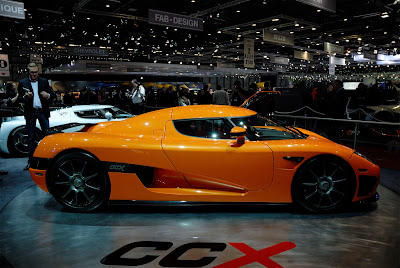
Koenigsegg CCX

Koenigsegg CCX


The Koenigsegg CCX is a mid-engined sports car built by Koenigsegg Automotive AB.  Koenigsegg CCX  the project began with the aim of making a global car, designed and engineered to comply with global safety and environment regulations, particularly to enter the United States car market.[1]To sell cars in the US many alterations were made to the design
of the CCR; the previously used Ford Modular engine was replaced by a Koenigsegg CCX engine designed to run on 91 octane fuel, readily available in the United States, and to meet the Californian emission standards.The name Koenigsegg CCX  is an  abbreviation  for Competition Coupé X, the X commemorating the 10th anniversary (X being the Roman 


numeral for ten) of the completion and test drive of the first CC vehicle in1996. The  Koenigsegg CCX was unveiled at the 2006 Geneva Motor Show, sporting body modifications to meet US regulations and a new 4.7 L twin supercharged V8 engine capable of producing 806 PS (593 kW; 795 hp) at 7000 rpm and 920 N·m (679 lb·ft) at 5700 rpm of torque while running on 91 octane gasoline. There were 14  Koenigsegg CCX  produced between 2006 and 2010.

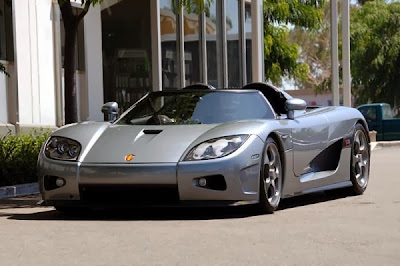
KOENIGSEGG CCX
The new engine of Koenigsegg CCX is of all aluminum construction, made out of 356 aluminum with a T7 heat treat to further  Koenigsegg CCX enhance block integrity and cylinder bore chill during casting. Specifically created and cast for Koenigsegg by Grainger & Worrall, a casting specialist with Formul 1
 experience in drivetrain components, the engine is built, assembled and tested at their Ängelholm production plant The Koenigsegg CCX engine is lubricated with a dry sump system with a separate oil pump and the pistons are cooled by means of an internal cooler that sprays oil onto them. Koenigsegg CCX in order to run high cylinder pressure with 91 octane fuel making it capable of 14 mpg (17 l/100 km) in combined cycle and 18 mpg (13 l/100 km) in highway travel.

KOENIGSEGG CCX

Koenigsegg CCX available transmissions are aCima[disambiguation needed] 6-speed manual and a 6-speed automated manual Power is fed to the wheels through a torque-sensitive limited slip differential.Koenigsegg CCX chassis is made from carbon fiber reinforced with kevlar and aluminium honeycomb like previous models and while the body keeps the targa top body style and the "dihedral synchro-helix" actuation doors it is completely reworked, there is a Koenigsegg CCX new front bumper design,
 enhanced brake cooling, fog lamps, US position lights, a new fresh air intake on the bonnet that acts new additional in  Koenigsegg CCX ram air booster, air intakes behind the front wheels to enhance airflow and a glass window over the engine. The Koenigsegg CCX has frontal area of 2,894 sq in (1.867 m2) and a drag coefficient of 0.30. Koenigsegg CCX also has a flat underside with venturi tunnels at the rear and an optional rear spoiler to improve aerodynamics At 200 km/h (120 mph) there is 60 kg of downforce over the front axle and 65 kg over the rear  Koenigsegg CCX car is 88 mm (3 in) longer to comply with the US rear impact regulations and to free space around the rear muffler.  Koenigsegg CCX interior side, there is 51 mm (2 in) of extra headroom as well as specifically designed Sparco carbon fiber seats.i have a good experience with Koenigsegg CCX.


courtesy by http://www.carallmodel.blogspot.com

BMW X6


BMW X6


BMW X6


The 2012 BMW X6 ranks 18 out of 18 Luxury Midsize SUVs. This ranking is based on our analysis of 40 published reviews and test drives of the BMW X6, and our analysis of reliability and safety data.
Though reviewers love driving the 2012 BMW X6, they question its purpose. It’s a high-performance SUV with a sports-car price tag and limited utility.

Reviewers can’t figure out what type of vehicle the BMW X6 is, but after driving it, they’ve decided that they don’t care, and call it one of the best-handling, most fun-to-drive SUVs on the market. However, the auto press emphasizes that those looking for practicality or value should look elsewhere. “We set out to determine what the BMW X6 is, and this is our answer: BMW X6 a fully capable, beautifully finished, and superbly comfortable four-place sports car with a trunk big enough for almost any adventure and the ability to tow up to three tons of what won’t fit inside,” writes Car and Driver.

BMW X6

The BMW X6 is a vehicle reviewers love, but consumers may have a hard time justifying a $60,000 purchase. Though its base trim costs $11,700 more than the BMW X5, it has less cargo space and can seat only four (a fifth seat was added as a $350 option this year). The BMW X6’s suspension is tuned tightly to make it sporty, but some reviewers say that makes it uncomfortable as a daily driver. The ActiveHybrid X6 adds $30,000 to the base price and makes 100 more horsepower than the base BMW X6, but it gets worse fuel economy than the base model. And the BMW X6’s 2.5-ton curb weight cuts down on any fuel economy that could have resulted from the turbocharged, direct-injected six-cylinder engine.
But, if you’re in the market for a fun-to-drive SUV with loads of interior amenities and aren’t constrained by a budget, reviewers say you won’t find anything better than the BMW X6. It takes corners like a pro, and the upgraded V8 engine blasts it to 60 mph in 5.2 seconds. Plus, it comes stuffed to the gills with standard features like front and rear parking sensors, a power liftgate, leather upholstery and adaptive cruise control. To some shoppers, the BMW X6 will make no sense at all, but to others, it’s an ideal combination of track star and people-hauler.

BMW X6


If you’re in the market for a practical SUV, the BMW X6 definitely isn’t it. But, you can still get a fun-to-drive, luxury midsize SUV with plenty of space for your family for a class-competitive price. The BMW X5 has an optional third row of seating, and its 75.2 cubic feet of maximum cargo capacity easily beats the X6’s 59.7 cubic-foot maximum. Plus, the base X5 starts at $47,200, which is $11,700 less than the base X6. And you can still be a speed demon in your X5. A high-performance X5 M starts at $86,400, which is expensive, but undercuts the BMW X6 M by $3,100.
If you’re attracted by the BMW X6’s lifted-back coupe styling but think its starting price is too high, check out the Acura ZDX. It’s a similar coupe-like SUV with an emphasis on performance, but its MSRP is just a hair more than $46,000. That means it costs less than the BMW X6 by about $12,900. Plus, the ZDX comes standard with five seats, which is one more than the BMW X6.


 courtesy by http://usnews.rankingsandreviews.com/cars-trucks/BMW_X6/

BMW Z4

BMW Z4


BMW Z4


The BMW Z4 is one of the more intriguing sports cars available. It's a successor to the original Z3 and is the company's only two-seat sports car. BMW Z4 features traditional characteristics such as a front-
engine/rear-drive layout, a hunkered-down stance, a long hood and rearward positioning of driver and passenger. While the first BMW Z4 featured a traditional soft top, the current BMW Z4 model has a sleek retractable hardtop that makes this fun-loving roadster a more viable all-year car choice.
The current BMW Z4 also represents a slight change in philosophy for BMW's roadster, as it sacrifices ultimate handling for greater ride comfort and overall refinement. The BMW Z4 result is a grand touring coupe and roadster, and one of the most rounded sports cars money can buy.

BMW Z4


The BMW Z4 is offered in three trim levels: sDrive30i, sDrive35i and sDrive35is. The BMW Z4 30i gets a 3.0-liter inline-6 that produces 255 horsepower and 220 pound-feet of torque. The 35i comes with a twin-turbocharged 3.0-liter inline-6 good for 300 hp and 300 lb-ft of torque. Both cars have a six-speed manual transmission as standard. BMW Z4 six-speed conventional automatic is optional on the sDrive30i, while the optional transmission for the sDrive35i is a seven-speed dual-clutch automated manual (DCT). The BMW Z4 35is gets a revised version of the regular 35i's engine, boasting 335 hp and 332 lb-ft of torque with a temporary overboost function that pumps torque up to 369 lb-ft. DCT comes standard.
Though the primary distinction among the trims involves their engines, there are some equipment differences. The BMW Z4 sDrive 30i and sDrive 35i come standard with xenon headlights, HD radio, six-way manually adjustable seats, and adjustable driving settings that change the programming for the steering, throttle -- and if so equipped -- automatic transmission. The BMW Z4 sDrive35i adds sun-reflective leather upholstery, automatic climate control and fancy aluminum interior trim -- all of which are optional on the cheaper model. The BMW Z4 sDrive 35is is similar but comes standard with the M Sport package. Other options include Bluetooth, power seats with driver memory functions, heated seats and steering wheel, an iPod interface, an upgraded stereo and a navigation system (includes the iDrive electronics interface).

BMW Z4


In reviews, we've found the BMW Z4 to be an impressive and highly refined sport touring car. The interior is surprisingly spacious, as is the trunk when the retractable roof is raised. When it's lowered, though, there's only room for a small suitcase. Every Z4 has high handling limits, but its reflexes and communication with the driver are a bit of a letdown due to a numb electric power steering system, a fairly hefty curb weight and the Z4's predilection for understeer. Still, we think most buyers will be appreciative of the Z4's firm yet compliant ride and sensational engines that make a drive up a winding coastal or country road a wonderful


courtesy by http://www.edmunds.com/bmw/z4/